Unlocking Separated Value: The Condominium ADU (CAB) as the Westside's New Wealth Instrument
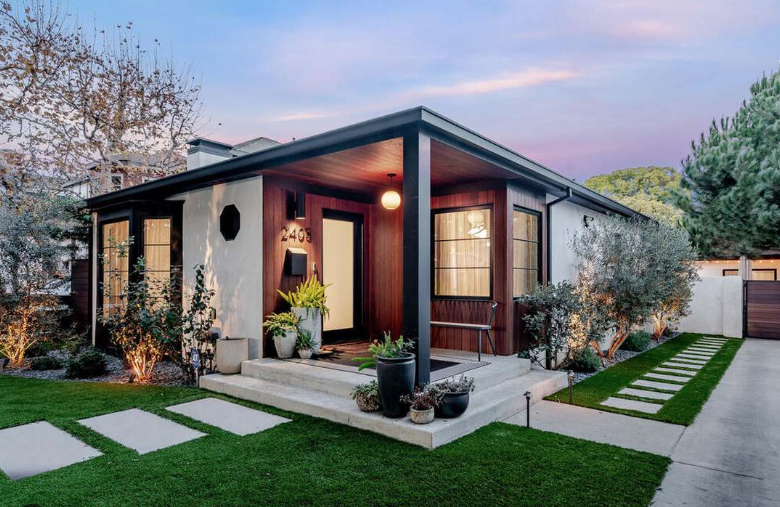
The landscape of coastal California real estate investment is undergoing a pivotal shift. For sophisticated property owners on the Westside—specifically in markets like Santa Monica and Venice where land is at a premium and construction costs approach $300–$400+ per square foot—the Accessory Dwelling Unit (ADU) is evolving from a simple rental unit into a powerful new financial asset.
This transformation is driven by California Assembly Bill 1033 (AB 1033), which permits local municipalities to allow the separate sale of an ADU from its main residence, effectively turning it into a Condominium Accessory Building (CAB). This strategy redefines the concept of a single-family asset, presenting an immediate opportunity for equity extraction and precise wealth transfer.
The Strategic Shift: From Dual-Income to Dual-Asset
Prior to AB 1033, a permitted ADU was primarily a dual-income vehicle, typically adding $200,000–$500,000 to the total property valuation based on income capitalization and square footage. The CAB strategy provides a radically different financial mechanism:
-
Immediate Equity Liquidity: Owners can now monetize the value of the ADU without selling the primary residence. This allows for the swift extraction of capital for reinvestment, debt reduction, or diversification, a strategic advantage that avoids the complication and cost of a full property sale.
-
Creating 'Attainable' Coastal Ownership: For the buyer, an ADU-condo creates a lower-entry point, deeded interest in a high-demand neighborhood. This appeals directly to buyers who seek the Westside zip code and lifestyle without the multi-million dollar price tag of a primary home.
-
Enhanced Valuation Model: Properties with ADUs have shown a historically higher appreciation rate, with studies showing they appreciate 22% more than properties without them (FHFA analysis, 2013-2023). By decoupling the unit, you potentially realize a sale price that exceeds the capitalized rental income value, as the CAB is priced as its own independent dwelling.
Westside Snapshot: In premium markets like Santa Monica, a well-designed 600 sq. ft. detached ADU can cost around $300,000 to build but can add a market value significantly higher once sold as a separate condo, providing a highly attractive gross Return on Investment (ROI) for the construction cost (Source 1.1, 1.3).
Multi-Generational Wealth and Legacy Planning
The most compelling application of the CAB strategy is in sophisticated legacy planning and multi-generational wealth. This is where the condo-ized ADU becomes a precision tool, far surpassing the former model of simply renting to a relative.
-
Tax-Advantaged Transfer: Instead of complex trust structures for a shared single-family lot, the CAB can be gifted or sold to a family member (e.g., an adult child or grandchild) at a lower, more definable value than a full single-family home. This facilitates early, tax-efficient transfer of a real asset.
-
Maintaining Autonomy and Proximity: The condominium structure grants the receiving party full, deeded legal ownership of their unit. They build equity independently, secure their own financing, and maintain full control, all while residing steps away from the main family property.
-
Preserving Prop 13: The conversion of the ADU to a condo triggers a reassessment only on the ADU, leaving the primary residence’s Proposition 13 tax basis untouched—a critical advantage in long-term California holdings.
Navigating the Operational Complexities
Executing the Condominium ADU strategy requires careful attention to legal and financial prerequisites, as the process is closer to a small-scale development project than a typical home renovation:
-
Local Ordinance Adoption: AB 1033 is an opt-in law. While Santa Monica is reported to be among the cities adopting the ordinance, Westside investors must confirm their local municipality (e.g., Los Angeles City, County) has officially passed the necessary regulations.
-
Condo Mapping and HOA Creation: The unit must be mapped under the state's Subdivision Map Act and established as a condominium under the Davis-Stirling Common Interest Development Act. This requires:
-
Formation of a Mini-HOA: A formal Homeowners Association (HOA) must be established between the two units to govern shared costs for common areas like driveways, utility connections, and structural maintenance.
-
Utility Separation: The ADU generally requires independently metered utilities (electricity, water, gas) to function as a fully separate property.
-
Lender Consent: If the primary residence has a mortgage, written consent from the lienholder is mandatory before any condo plan can be recorded, as the conversion affects the collateral used for the loan.
The Condominium ADU is not merely an investment; it is a structural asset play that maximizes property utility, offers critical financial flexibility, and provides a precise instrument for long-term, multi-generational wealth structuring in the tightest real estate markets. Campbell Wellman can help you navigate, structure and plan your goals – give us a call.