


The $4.4 Trillion Engine: Why California Real Estate Remains America’s Premier Safe Haven
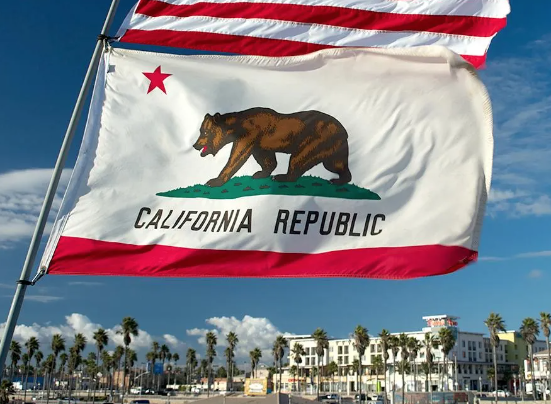
When analyzing national headlines, it is easy to lose sight of the foundational economic drivers beneath our local real estate market. Recent data released by the U.S. Bureau of Economic Analysis (BEA) for Q1 2026 highlights a fundamental truth: California is driving America’s economy by a staggering margin.
The National Picture: A $31.87 Trillion Economy
Across the United States, total annualized GDP reached $31.87 trillion in early 2026. While economic output is distributed across 50 states, wealth generation and industrial output are concentrated in a handful of powerhouse regions.
The top 14 states generate the overwhelming majority of American GDP, with Texas (3.03T/9.5%),NewYork(2.55T / 8.0%), and Florida ($1.90T / 6.0%) anchoring significant regional economies.
However, one state sits in a league entirely of its own.
California by the Numbers: Leading the Nation
California generated $4.40 trillion in GDP in Q1 2026, representing 13.8% of the entire United States economy.
-
The Gap: California’s economic output is 45% larger than Texas (the second-largest state economy) and 131% larger than Florida.
-
Global Scale: If California were a sovereign nation, its $4.4 trillion economy would rank as the 4th largest in the world, sitting comfortably ahead of Japan and trailing only the aggregate U.S., China, and Germany.
-
Capital & Innovation Hub: Driven by biotech, entertainment, defense, and venture-backed technology, California continues to generate wealth at a rate that outpaces most developed nations.
What This Means for Coastal Los Angeles Real Estate
For real estate investors and homeowners in the Westside and South Bay—from Pacific Palisades and Venice down to Manhattan Beach—these figures reinforce why coastal property remains a high-conviction asset class.
1. Wealth Concentration & Sustained Demand
A $4.4 trillion economy creates an incredible concentration of high-earning professionals, founders, and executive liquidity. That capital flows directly into luxury real estate, sustaining buyer demand across prime coastal pockets even during fluctuating interest rate cycles.
2. Geographically Finite Supply
While states like Texas and Florida boast vast land for suburban sprawl, coastal Southern California is naturally land-locked between the Santa Monica Mountains and the Pacific Ocean. Combining immense GDP output with strictly finite coastal land creates an enduring imbalance where demand consistently exceeds available inventory.
3. Long-Term Capital Preservation
Real estate in prime Westside and South Bay neighborhoods functions as an economic safe-haven asset. The sheer underlying strength of California's private sector—comprising 90% of the state's GDP—ensures that coastal property acts as an inflation hedge backed by real economic productivity.
The Campbell Wellman Take
National economic headlines often paint real estate with too broad a brush. When you zoom in on California, you’re looking at a $4.4 trillion economic powerhouse. When you narrow that down to coastal Los Angeles—where land is scarce and global capital converges—you realize why high-net-worth buyers continue to treat Westside and South Bay real estate as one of the safest long-term wealth stores in the world.