


Living with Giants: Inside the Legendary Broad Estate in Brentwood
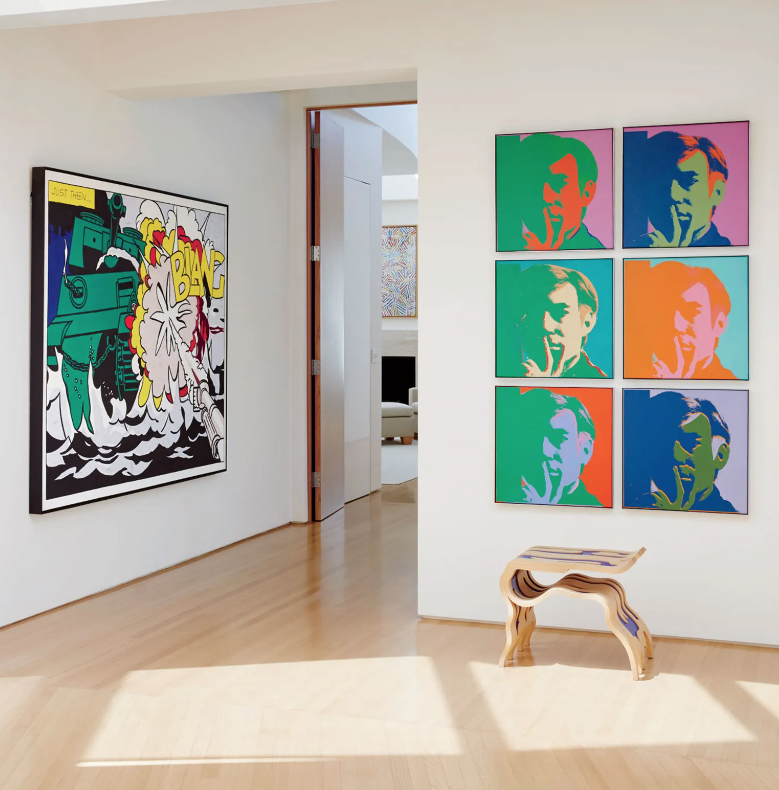
Great art collections typically belong to institutions, tucked behind stanchions and protected by climate-controlled glass. But long before downtown Los Angeles welcomed the striking honeycomb facade of The Broad museum on Grand Avenue, one of the world’s most vital collections of postwar and contemporary masterworks lived in a quiet, domestic sanctuary right here on the Westside.
In Brentwood, the private estate of the late Eli Broad and his wife, Edythe, served as a brilliant, deeply personal laboratory for modern patronage. The home wasn't just a container for their legendary 2,000-piece collection—it was a living canvas where daily life and towering cultural ambition existed in constant conversation.
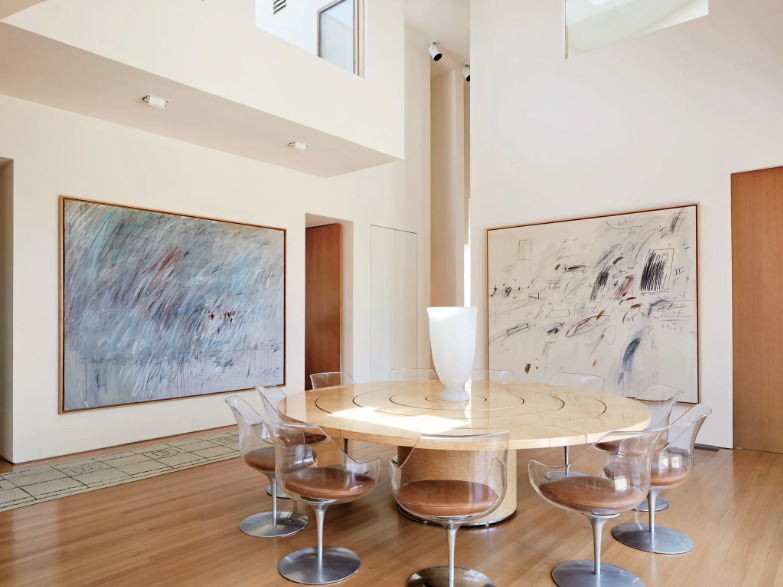
An Architectural Masterpiece Built for Masterworks
Spanning a manicured three-acre estate, the 13,000-square-foot residence is an architectural tour de force. Originally envisioned by legendary architect Frank Gehry, the structural design was later executed by the acclaimed firm Langdon Wilson.
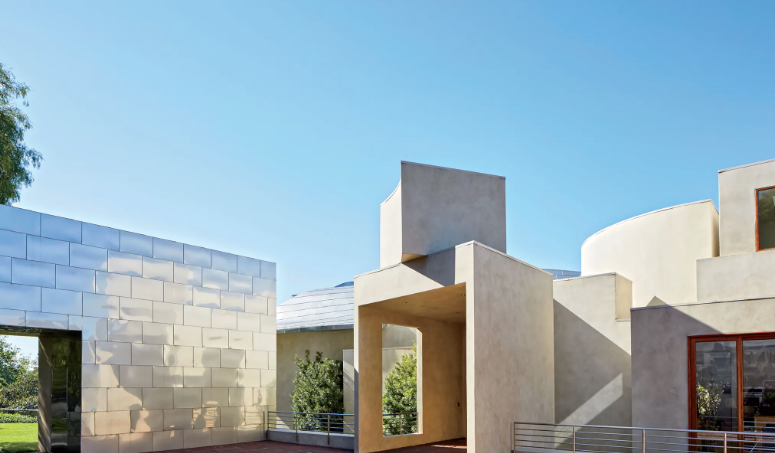
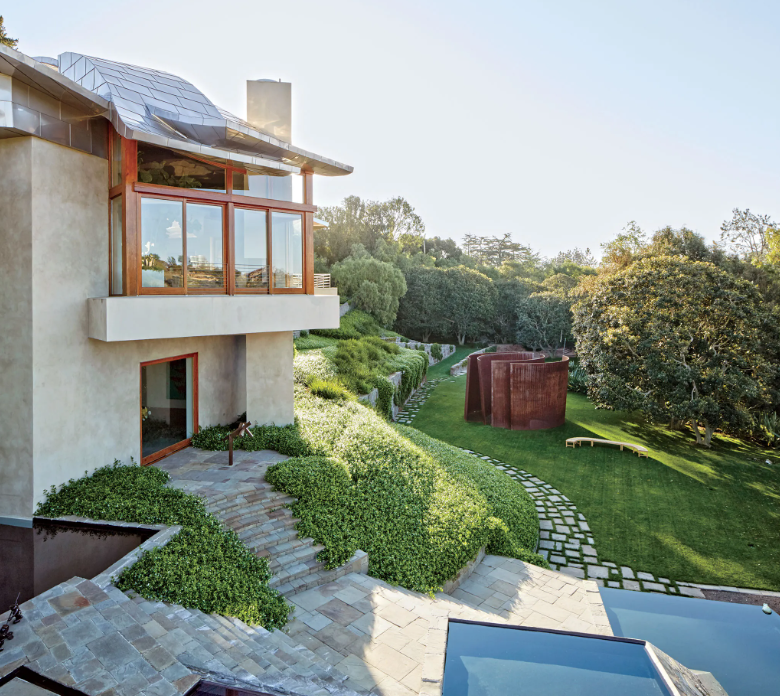
The result is a structure defined by sculptural bravado, soaring volumes, and radical materials.
Inside the main living area, guests are greeted by a breathtaking, free-form welded stainless-steel ceiling. Acclaimed interior designer Rose Tarlow, who meticulously shaped the home’s interior textures, famously described it as “a giant Japanese paper kite hovering above the voluminous space.” Rather than feeling cold or sterile, Tarlow grounded the home with highly refined woods and custom furnishings, creating an environment that was simultaneously theatrical and intimate.
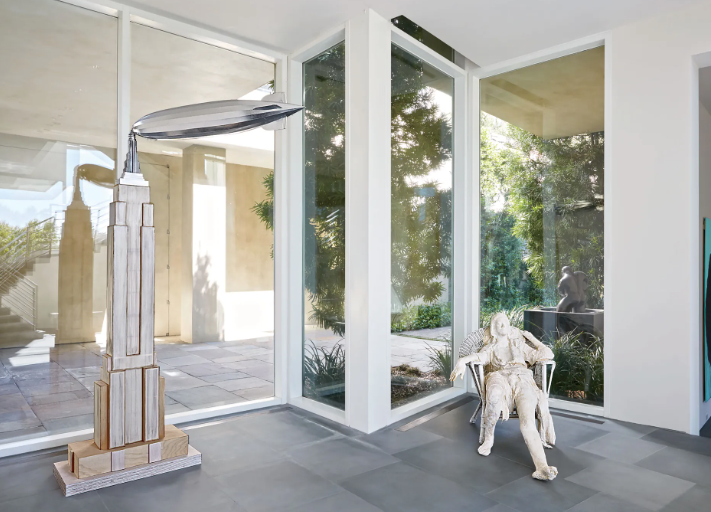
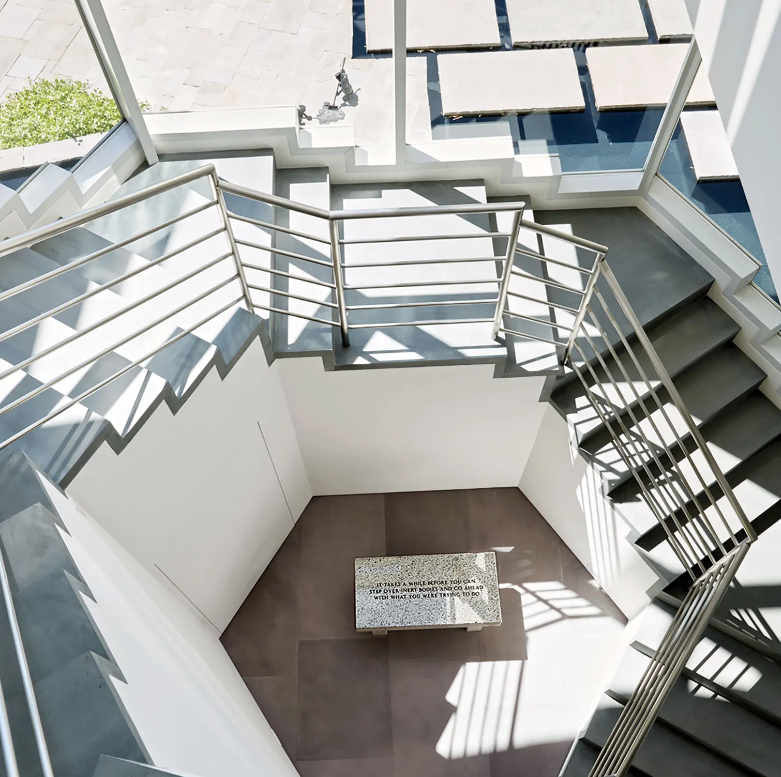
The entire lower level of the two-story home was specifically engineered as a private, museum-grade gallery, while the sweeping grounds, shaped by Rios Clementi Hale Studios, create a rolling green sanctuary explicitly designed to contextualize monumental outdoor sculptures.
Where Masterpieces Met Daily Life
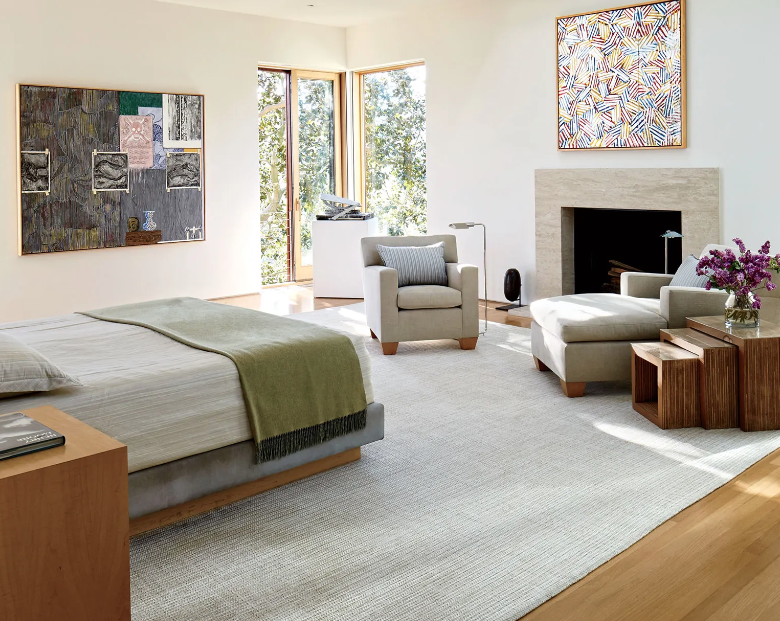
What made the Broad estate truly remarkable wasn't just the sheer market value of the works, but the fearless, unpretentious way Eli and Edye lived among them. Art was never relegated to a distant wing; it occupied the spaces of their everyday existence.
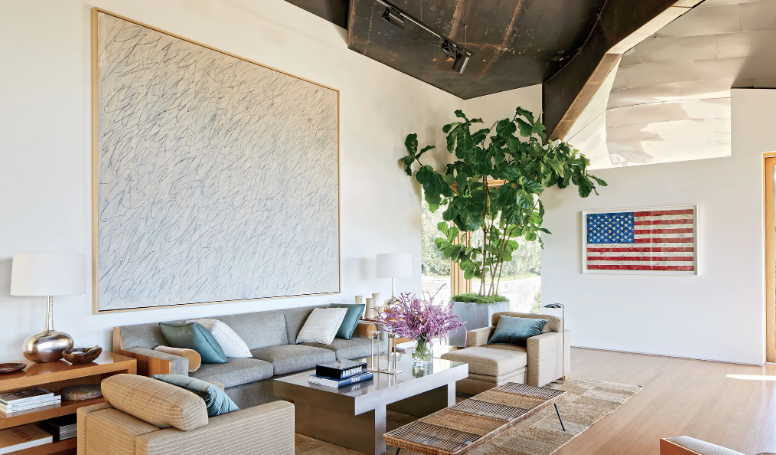
In the sunlit living room, a delicate Alexander Calder mobile caught the coastal breeze, while massive, emotionally raw landscapes by Anselm Kiefer dominated the walls. Robert Rauschenberg’s iconic Red Painting (1954)—which the Broads famously acquired after trading away a delicate Van Gogh drawing that was too light-sensitive to leave Eli’s underwear drawer—sat proudly in the living space.
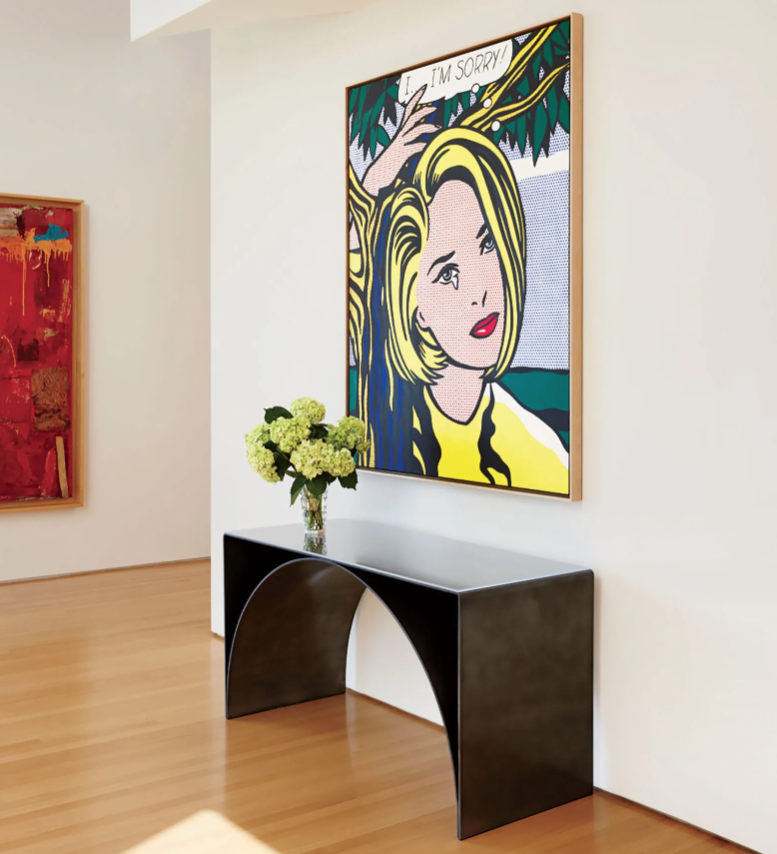
Every corner of the house presented a charged, brilliant pairing: a George Segal figurative sculpture standing near a window, a classic Giacometti bronze in a quiet alcove, and text installations by Jenny Holzer threading through private rooms.
The Campbell Wellman Take
When we look at the ultra-luxury real estate market in neighborhoods like Brentwood and Pacific Palisades, we often talk about square footage, view corridors, and premium materials. But the Broad estate represents the absolute pinnacle of what a property can be: architecture as an expression of world-building. Eli and Edythe Broad built a civic engine. The deeper logic of their patronage—the same vision that drove the expansion of MOCA, the construction of the Walt Disney Concert Hall, and ultimately their eponymous downtown museum—was practiced first right here in their own home. It stands as a powerful reminder that the most extraordinary properties in Los Angeles are where LA history, culture, and power are quietly shaped.