


A Clearer Picture Beneath the Surface: Free USC Soil Testing for Fire-Impacted Communities
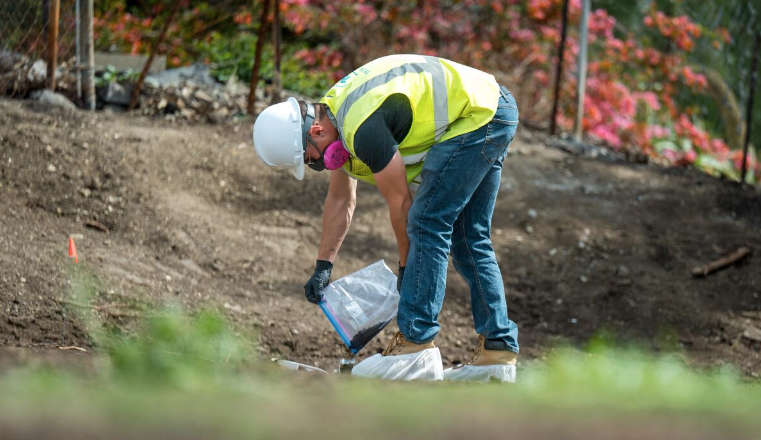
Since the Palisades and Sunset wildfires, our community has focused on the monumental effort of rebuilding and recovery. But as the smoke has cleared and life returns to a new rhythm, an invisible danger may remain in our soil, lying just beneath the surface. Now, residents affected by the West L.A. wildfires have a powerful new tool to protect their homes and their health: the free USC CLEAN Program.
While wildfires naturally clear out vegetation, urban and suburban fires present a unique and far more insidious risk. They burn through man-made materials like lead paint, plastics, and treated wood, leaving behind a toxic mix of heavy metals and other chemicals in the ash. When this ash settles on the soil, it poses a direct health risk, especially to families with children.
Understanding the Unseen Dangers
The USC Contaminant Level Evaluation and Analysis for Neighborhoods (CLEAN) program is a rapid-response effort designed to provide residents with critical information. Currently, the program focuses on detecting lead, a dangerous neurotoxin that can cause serious long-term health issues, particularly in young children and pregnant women. The program will soon expand to test for polycyclic aromatic hydrocarbons (PAHs), a class of chemicals formed by incomplete combustion, many of which are known carcinogens.
This free testing service fills a crucial gap. While the fires are extinguished, and many cleanup efforts are underway, federal agencies have not committed to comprehensive soil testing after the initial debris removal. This has left homeowners and community members to navigate a complex issue on their own.
How to Get Your Soil Tested
Operated by a collaboration between the USC Department of Earth Sciences, Keck School of Medicine, and Public Exchange, the CLEAN program is designed to be accessible and straightforward. It's a simple, invaluable first step for understanding your property's soil safety, though it is not a substitute for the more rigorous environmental testing needed for regulatory compliance.
Residents can submit up to two soil samples per household (each no more than ¼ cup). The process is easy:
-
Review the sampling guide for safe collection methods.
-
Complete the intake survey to receive a Unique Sample ID.
-
Submit your samples via mail or at a designated drop-off location.
The program has established two convenient drop-off sites:
-
American Legion Post 283 in Pacific Palisades (15247 La Cruz Dr.)
-
Lloyd Taber-Marina del Rey Library (4533 Admiralty Way)
Results are typically available within three weeks and are posted to a public Google Sheet and an interactive map, allowing for both individual analysis and a broader understanding of the community’s overall safety.
For residents rebuilding, this data is invaluable. Knowing your soil's condition is a fundamental step in making informed decisions about landscaping, rebuilding, and ensuring the long-term safety of your family and property.
For more information or to suggest additional drop-off sites, residents can email cleanproject@usc.edu