From Concrete Shell to Crypto-Clubhouse: The Saga of Kanye’s Tadao Ando Malibu Home
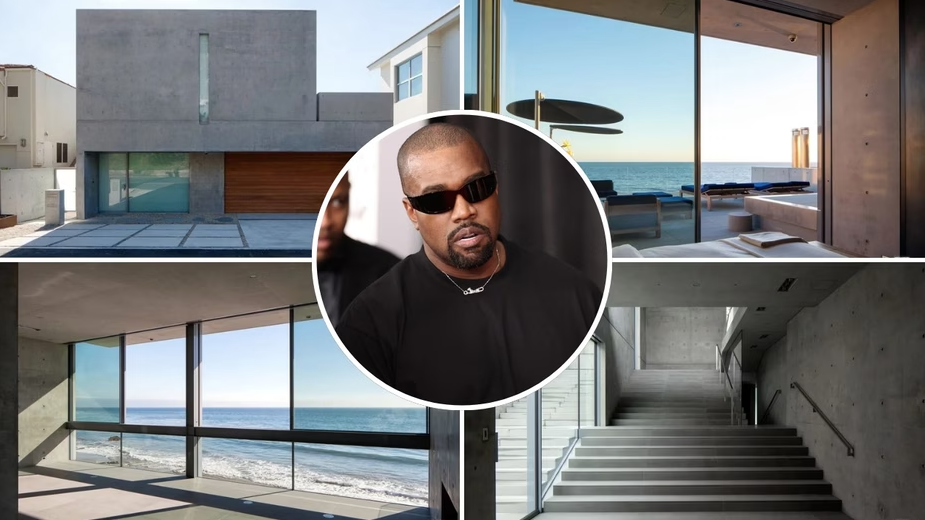
One Malibu property perfectly captures the volatile interplay between genius design, celebrity, and market innovation: the oceanfront residence at 24844 Malibu Road.
Originally a rare, minimalist masterpiece by Pritzker Prize-winning architect Tadao Ando, the home is now the center of a blockchain-backed timeshare venture—a dramatic turn that underscores the unique financial and artistic complexities of ultra-luxury Westside real estate.
The Original Vision: Ando’s Brutalist Beauty
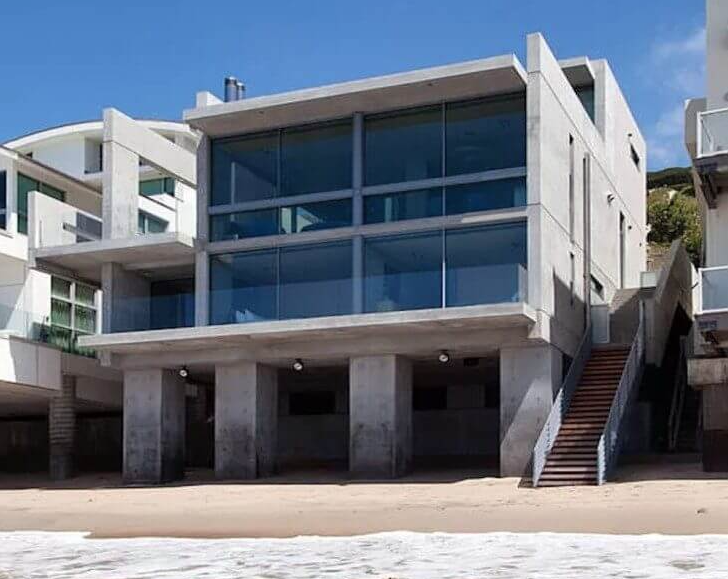
The home, constructed in 2013, stands as one of only a handful of private residences in the United States designed by the Japanese master, Tadao Ando. His signature style is known as Critical Regionalism or, more colloquially, Architectural Brutalism—a style defined by an assured, seamless use of reinforced, smooth-as-silk concrete and an intense focus on natural light and the surrounding environment.
The 4,000-square-foot structure was an art object itself, designed to harmonize with the ocean. It was built with immense structural integrity, utilizing 1,200 tons of concrete and 200 tons of reinforced steel, with its three levels designed to offer distinct purposes, from guest suites to a penthouse-level owner’s domain.
The West Intervention: Stripped to the Bone
In 2021, the property was purchased by Kanye West (Ye) for a staggering $57.3 million. What followed was a controversial architectural deconstruction. Ye stripped the interior down to its absolute structural shell, removing all plumbing, electrical systems, HVAC, windows, and high-end finishes.
While some saw this as a radical re-envisioning, the move essentially reduced the property to its concrete foundation, decimating the interior value and resulting in an almost $36 million loss when it was eventually sold to developer Steven "Bo" Belmont of Belwood Investments for $21 million in September 2024.
This episode serves as a powerful reminder that even the most iconic architectural assets are subject to the caprice of ownership, yet their underlying structural value—especially oceanfront land—remains compelling.
The Relaunch: Blockchain and Fractional Ownership
The property is now being relaunched as the centerpiece of Populis, a new membership-based club co-founded by Belmont. This initiative marks a sophisticated attempt to merge architectural preservation with fractional, crypto-backed investment:
-
SmartDeeds: Memberships are marketed toward affluent architecture enthusiasts, offering "partial economic ownership" through SmartDeeds—blockchain-secured passes.
-
Investment Tiers: Tiers range from a $1,000 Gold membership up to a $300,000 invitation-only Founders' Circle, offering benefits like concierge services and annual hosted stays.
-
The Goal: Populis aims to "democratize access to premium real estate investments" by crowdfunding the restoration of architecturally significant homes and converting them into exclusive member-only destinations.
However, the venture launches with significant financial complexity, as the developer works to cure a default on an $18.5 million mortgage tied to the property. This highlights the high-stakes, capital-intensive nature of restoring a trophy asset in the fragile Malibu market.
The Campbell Wellman Perspective
For our clients who appreciate the value of design integrity—which our Campbell Wellman and Spiegel Wellman teams uphold—this saga is both fascinating and cautionary.
While the original finishes were lost, the core Tadao Ando concrete structure remains an immutable object of value. The new venture attempts to capitalize on that enduring architectural cachet and the scarcity of Malibu oceanfront.