


Capital Gains vs. Depreciation: What's Actually Making You Money in Today's Market?
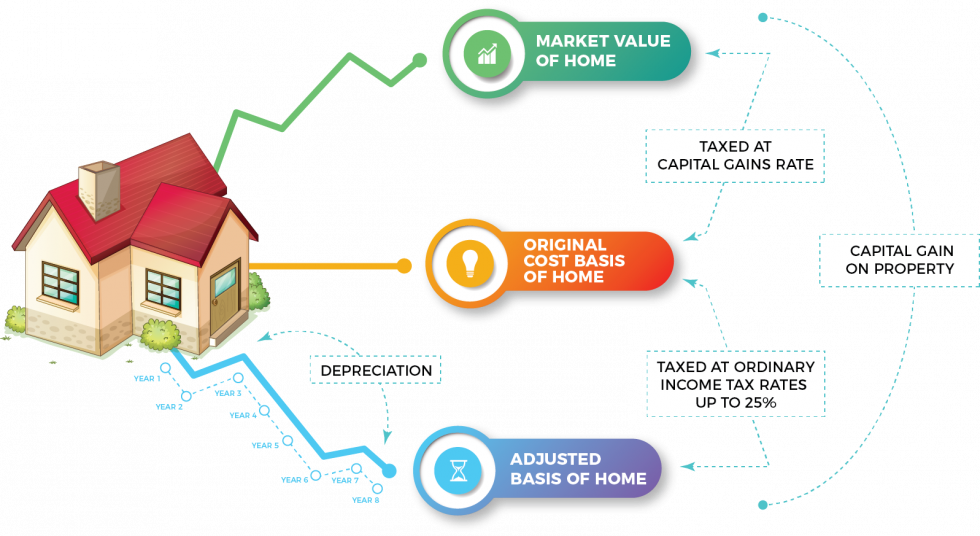
For years, real estate conversations have been dominated by one powerful word: appreciation. Investors and homeowners alike focused on the steady rise in property values, with capital gains seen as the primary engine of wealth. While the long-term appreciation of Westside properties remains a cornerstone of our market, the current conditions as of August 2025 demand a more nuanced perspective. In a market where appreciation is moderating, the predictable, silent power of depreciation is proving to be a key driver of year-over-year profitability.
So, in today's environment, which one is actually making you money? Let's take a look.
The New Reality of Capital Gains
Capital gains—the profit made from selling a property for more than its purchase price—are no longer the frenzied, double-digit windfalls we saw in recent years. Today's market is showing signs of a welcome stabilization. According to recent data from July 2025, the median list price for homes on the Westside has increased by a modest 1.1% year-over-year. While overall LA County saw a 3.3% year-over-year increase, this growth is not uniform. In fact, some Westside sub-markets saw price appreciation for certain property types while others experienced a decrease, highlighting the variability of returns.
This moderation means that while you can expect a long-term increase in your property’s value, capital gains are not the reliable, year-over-year profit center they once were. They are an eventual reward, not an immediate cash flow or tax benefit.
It's also worth noting the current conversation around capital gains. While highly speculative, there is a current political discussion about potentially eliminating the federal capital gains tax on the sale of a primary residence. This is a topic to watch, as such a change could have a profound effect on homeowner decisions and market inventory, but for now, the existing tax structure remains a key factor in any sale.
The Silent Power of Depreciation
This is where the less glamorous, but incredibly powerful, tool of depreciation comes into play. Unlike capital gains, which are future, realized profits, depreciation is a non-cash tax deduction that you can claim every single year.
The IRS allows residential rental property owners to depreciate the value of a property’s structure (excluding the land) over a set period of 27.5 years. This deduction works by treating the building as an asset that loses value over time, even if its market value is actually increasing.
Let's compare this in a practical example:
Imagine you own a Westside income property purchased for $2.5 million, with $2 million allocated to the building and $500,000 to the land.
-
Potential Capital Gain: Based on a conservative 2% appreciation rate, the property's value might increase by $50,000 over the next year. This is a great unrealized gain, but you can't access it without selling or refinancing, and it's subject to market shifts.
-
Predictable Depreciation Gain: Based on the IRS’s 27.5-year schedule, you can deduct approximately $72,727 from your taxable income for the year ($2,000,000 divided by 27.5). This isn’t a one-time gain; it’s an annual, consistent reduction of your tax liability.
In this scenario, the guaranteed tax savings from depreciation exceed the potential capital gain for the year. This "paper loss" helps to offset rental income and, for many investors, other sources of income, putting more money back in your pocket today.
The Bottom Line for Westside Investors
In today’s balanced market, the savvy investor understands that while long-term appreciation is the destination, depreciation is the engine that drives consistent financial gain along the way. While capital gains are subject to the ebb and flow of the market, the tax benefits of depreciation provide a reliable, year-over-year financial advantage. For high-end Westside investors, it’s not about choosing one over the other; it’s about appreciating both for what they offer—capital gains for future wealth and depreciation for immediate, tangible tax savings.