The $500 Billion Question: How the Potential Fannie-Freddie IPO Could Reshape the Mortgage Market
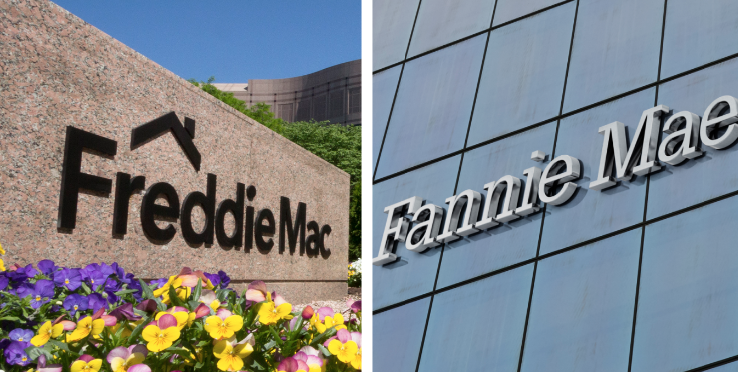
The Whitehouse Administration is actively exploring an initial public offering (IPO) for the mortgage giants Fannie Mae and Freddie Mac, a move that could fundamentally reshape the nation's housing finance system. Top banks, including Goldman Sachs, JPMorgan Chase, and Morgan Stanley, are vying for lead roles in the massive deal, which administration officials currently value the Government-Sponsored Enterprises (GSEs) at a combined $500 billion or more.
If executed, the partial sale of stock, anticipated to raise approximately $30 billion by selling 5% to 15% of the companies, would rank among the largest IPOs in history, potentially eclipsing the record set by Saudi Aramco in 2019.
This is not merely a financial transaction; it represents the long-anticipated and complex shift for the entities that have operated under federal conservatorship since the 2008 financial crisis. Fannie and Freddie are the core of U.S. housing liquidity, underwriting a guarantee on roughly 70% of the nation's mortgage market. The stakes for homeowners, lenders, and investors are enormous.
The Core Challenge: Maintaining Stability and Affordability
The primary challenge of this planned IPO lies in navigating the future role of the government's backing. Historically, the implicit (or perceived) government guarantee on Fannie and Freddie debt has been the "grease" that keeps the mortgage market liquid, stable, and affordable, ensuring the widespread availability of the 30-year fixed-rate mortgage.
Experts warn that if the IPO weakens the market's belief in this government backstop, investors in mortgage-backed securities (MBS) will demand a higher return to compensate for the increased risk. This would translate directly into higher mortgage rates and tighter credit standards for borrowers.
-
Potential Rate Increase: Without a clear government guarantee, industry insights suggest mortgage rates could rise by 0.25% to 0.40%—and potentially much more in a worst-case scenario. This increase would affect hundreds of billions of dollars in annual borrower costs.
-
Credit Tightening: Higher risk could lead to stricter lending criteria, disproportionately impacting first-time and lower-to-moderate-income buyers who rely on the GSEs' affordable loan programs.
Impact on the Luxury Market and Non-Conforming Loans
For the luxury housing market, the impact of the Fannie-Freddie IPO centers less on conventional conforming loans and more on the overall cost and availability of capital in the broader mortgage ecosystem:
-
Jumbo Loan Spreads: The luxury market primarily uses Jumbo Loans (mortgages exceeding the conforming loan limit set by the GSEs). While not directly guaranteed by Fannie or Freddie, the pricing of Jumbo loans is closely benchmarked against the agency MBS market. If the IPO leads to wider spreads (higher risk premiums) in the conventional market, Jumbo investors will likely demand similar increases, resulting in more expensive financing for high-net-worth buyers.
-
Credit Accessibility: If credit tightens in the conforming market, institutions may become generally more conservative across all loan products, including Jumbo. This could lead to stricter underwriting standards (higher down payment requirements, lower debt-to-income ratios) even for well-qualified luxury buyers.
-
Alternative Financing: A less stable, more expensive conventional market could push banks and specialized lenders to innovate with Non-Qualified Mortgage (Non-QM) products. While these are already common in the luxury sphere (for self-employed or asset-rich buyers), a market disruption could see a shift toward these less standardized, more bespoke, and potentially more volatile financing methods.
Key Unresolved Questions for the Market
The successful privatization of even a portion of Fannie and Freddie hinges on resolving critical, multi-layered policy questions that are currently being addressed by advisors and top bankers:
-
The Conservatorship Status: Will the companies remain under Federal Housing Finance Agency (FHFA) control after the IPO? A partial public offering while retaining government oversight creates a confusing "half-private, half-public" limbo that could deter long-term investors.
-
The Fate of the Guarantee: Will Congress pass legislation to provide an explicit federal backstop (a direct, legal guarantee) on the MBS, or will the implicit guarantee simply fade away? This decision is the single most important factor for future mortgage rates.
-
Capital Requirements: Before a full release from conservatorship, the GSEs need to build a substantial capital buffer (estimated combined requirement around $330 billion). The $30 billion raised by the IPO would be a helpful step, but far from resolving the total capital shortfall.
The timeline is aggressive, and the complexity is immense. While the desire to return the financial giants to the private sector and generate a federal windfall is clear, the long-term stability of the entire U.S. housing finance system depends on the cautious, durable resolution of these foundational policy issues. Only time will tell.